





Sagar Black Sandstone Manufacturers and Exporters in India
Where Can You Find Sagar Black Sandstone Manufacturers and Exporters?
If you're searching for a genuine Sagar Black Sandstone manufacturer, the honest answer is that most authentic supply comes straight from India's stone belt, not from traders reselling someone else's stock. SNK Surfaces is one of the manufacturers producing and exporting this stone directly, with ISO 9001:2015 certification and UKCA and CE marked paving. That certification matters because it tells architects and contractors the stone has been tested, not just photographed nicely. This guide walks through where the stone comes from, who exports it, and what to check before you place an order.
Where Is Sagar Black Sandstone Found in India?
Sagar Black Sandstone takes its name from the region historically linked to its extraction in central India, though today most commercial supply is processed through Rajasthan's stone industry, which handles the cutting, calibration, and export packaging for buyers worldwide. The stone itself is a sedimentary rock, formed over millions of years from compressed sand grains, which gives it that layered strength geologists have long documented (natural stone is composed of sand-sized mineral grains cemented together over time). Quarrying happens in blocks, which are then transported to processing units for cutting into slabs and tiles.
Where Can You Find Sagar Black Sandstone Manufacturers in India?
Manufacturers operate across two main clusters. Some run quarries and processing units in central India near the stone's original source, while a larger share of finishing and export packaging happens in Rajasthan, which has decades of infrastructure built around sandstone processing, cutting equipment, and port logistics. This split matters for buyers because processing location affects lead times and consistency far more than the quarry's exact address. A manufacturer with its own cutting and calibration facility can control quality end to end, while one that only trades finished slabs has less say over batch consistency.
Who Exports Sagar Black Sandstone to International Markets?
Several Indian companies export this stone, ranging from large manufacturer-exporters to smaller trading houses that buy from multiple quarries and resell. Direct manufacturers usually offer better pricing and more consistent batches since there's no middleman markup, while trading companies can sometimes source unusual sizes faster by pulling from different suppliers. Most established exporters can handle full container load and less-than-container-load orders for international construction projects. Major buyers include the UK, Ireland, parts of Europe, the USA, and increasingly the Middle East, where black indian sandstone is popular for both residential and commercial paving.
Why Source Sagar Black Sandstone Directly From India?
Buying quarry-direct cuts out reseller markups and gives you a supplier who actually controls block selection, cutting, and finishing. Direct manufacturers can usually confirm bulk and container-load availability faster, since they're not waiting on a third party's stock. Custom sizes and thicknesses are more realistic too, because the cutting equipment is on-site rather than outsourced. Multiple finish options, from riven to honed, are easier to arrange when the same facility handles processing and export packaging, which also means fewer handling errors before the stone reaches the port.
What Does Sagar Black Sandstone Look Like?
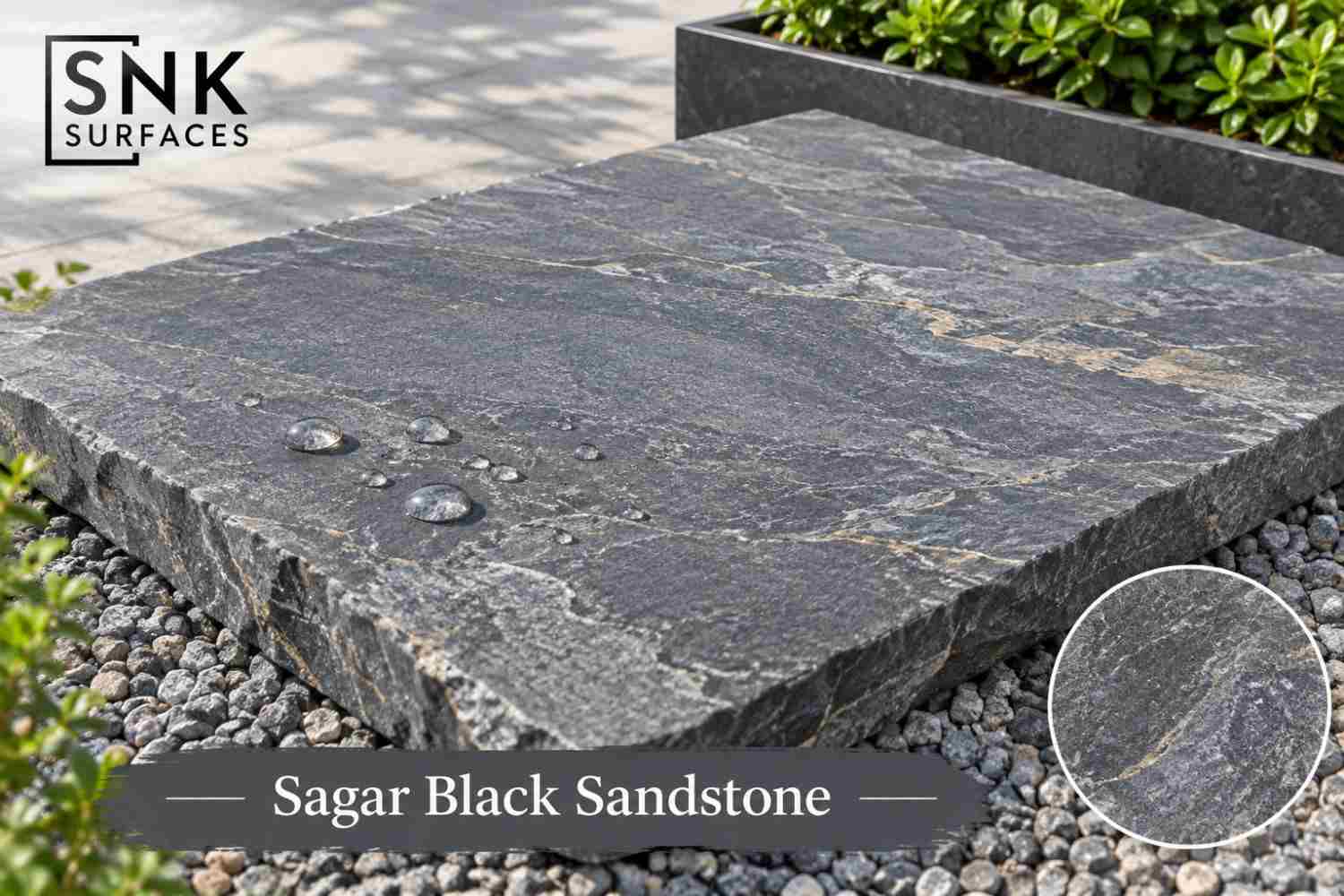
Despite the name, Sagar Black is rarely a flat, uniform black. It's usually a rich mix of charcoal, deep grey, and near-black tones, sometimes with subtle gold or bronze flecking that shows up more clearly once the stone is wet or sealed. This natural variation is part of the appeal for black sandstone paving, since no two slabs look identical. Compared to lighter Indian sandstones, its main strength is contrast, especially against greenery, pale render, or contemporary grey brickwork.
What Sizes and Thicknesses Are Available?
Standard paving sizes typically run from 300 x 600mm up through large-format 600 x 1200mm slabs, with common mid-range options including 600 x 600mm and 600 x 900mm, which remain the most requested size for patios. Thickness options generally span 12mm through 30mm, with 22mm calibrated being the standard choice for most UK patios and pathways. For buyers researching 900x600 indian sandstone, this size sits comfortably within that mid-range bracket and works well for both domestic and light commercial paving. Custom cutting for specific project dimensions is available through most manufacturer-direct suppliers, though it usually requires a minimum order quantity.
Which Finishes Are Available for Sagar Black Sandstone?
Flamed finishes give a slightly textured, matte surface that suits contemporary driveways and high-traffic paving. Riven finish keeps the stone's natural split texture and is the most requested option for garden patios. Sandblasted and shot-blasted finishes create a consistent non-slip texture without looking artificial. Smooth and tumbled finishes suit pool surrounds and interior applications where a softer, worn look is preferred. Choosing between them usually comes down to how much foot traffic the area gets and whether you want a rustic or clean modern appearance.
Where Is Sagar Black Sandstone Used?
This stone works well for patios and garden paving, where its dark tone creates strong visual contrast against plants and lighter furniture. It's also a popular choice for indian sandstone for driveways, since the denser finishes hold up under vehicle weight. Pool surrounds benefit from its slip resistance when properly sealed, and it's increasingly used for wall cladding and commercial landscaping where architects want a bold, modern material. Larger commercial and architectural projects often specify it for facades and feature walls where consistent batch supply really matters.
What Should International Buyers Check Before Choosing a Supplier?
Before committing to a supplier, confirm actual quarry or processing provenance rather than taking a listing's word for it. Ask whether they manufacture in-house or trade finished stone, since that affects consistency across large orders. Request batch samples to check color variation, and confirm available sizes, thicknesses, and finishes match your project specification. Certifications like CE, UKCA, and ISO 9001 are a reasonable proxy for quality control, and export packaging standards should meet ISPM-15 requirements for wooden crating. Finally, ask about realistic production capacity, lead times, and minimum container quantities before signing anything.
How Is Sagar Black Sandstone Prepared for Export?
The process starts with block selection and initial processing at the quarry or facility, followed by precision cutting and calibration to the required thickness. Surface finishing, whether flamed, riven, or tumbled, happens next, followed by a quality inspection stage where slabs are checked for cracks, chips, or inconsistent coloring. Approved stone is then wrapped and packed into fumigated wooden crates designed for sea freight, before being loaded into containers for international shipping to ports serving the UK, Europe, and beyond.
Why Choose SNK Surfaces for Sagar Black Sandstone?
SNK Surfaces states that it owns the quarry behind its Sagar Black Sandstone, which means fewer middlemen and more control over batch consistency from block to finished slab. The company manufactures in India and supplies multiple finishes for paving indian stone projects, walling, and outdoor applications, backed by ISO 9001:2015, CE, and UKCA certification. For faster delivery across the UK, SNK Surfaces also keeps warehouse stock in the UK, so importers, landscapers, and contractors can pull selected products without waiting on a full India-to-UK shipment. Combined with direct India manufacturing and export to Europe, the USA, and the Middle East, it covers both urgent local orders and large container-scale international projects.
Sagar Black Sandstone vs Other Indian Sandstones
Compared to Kandla Grey Sandstone, Sagar Black offers far more contrast and drama, while Kandla Grey suits a cooler, more contemporary palette. Against Fossil Mint Sandstone, which carries warm buff and cream tones with natural foliage patterns, Sagar Black feels heavier and more architectural. Versus Raj Green Sandstone, a traditional olive and khaki blend often chosen for period-style gardens, Sagar Black reads as distinctly modern. And compared to Autumn Brown, which leans into warm earthy tones, Sagar Black remains the go-to choice when a project calls for genuine depth and dark contrast.
Frequently Asked Questions About Sagar Black Sandstone Manufacturers and Exporters
Where is Sagar Black Sandstone manufactured?
It's processed mainly through India's Rajasthan stone belt, with quarry origins historically linked to central India.
Where can I find Sagar Black Sandstone exporters in India?
Look for manufacturer-exporters with their own quarry or processing facility rather than pure trading companies, and check for CE, UKCA, or ISO certification.
Can I buy Sagar Black Sandstone directly from an Indian manufacturer? Yes, most established manufacturers accept direct international orders, including sample requests before bulk commitment.
Which Indian companies export Sagar Black Sandstone internationally?
Several manufacturer-exporters ship to the UK, Europe, USA, and Middle East, typically through Mundra or nearby ports.
Can Sagar Black Sandstone be supplied in container quantities?
Yes, full container load and mixed container shipments are standard for manufacturer-direct suppliers.
What sizes are available for Sagar Black Sandstone paving?
Common sizes range from 300 x 600mm to 600 x 1200mm, with 600 x 900mm being the most popular for patios.
What finishes are available for Sagar Black Sandstone?
Flamed, riven, sandblasted, shot-blasted, smooth, and tumbled are the standard options.
How is Sagar Black Sandstone packaged for international shipping?
In fumigated, ISPM-15 compliant wooden crates designed to survive sea freight without slab damage.
How to Request a Sagar Black Sandstone Quote From an Indian Exporter
A useful quote request should include your project location, required quantity in square meters, preferred size and thickness, finish choice, intended application such as paving or cladding, packaging requirements, final delivery destination, any certifications you need on paper, and your target shipment schedule. Giving a supplier this detail upfront usually gets you a faster, more accurate quote than a vague enquiry.
Conclusion: Finding a Sagar Black Sandstone Manufacturer or Exporter in India
Finding a reliable Sagar Black Sandstone supplier comes down to checking real provenance, manufacturing capability, and export experience rather than picking the first listing you see. Whether you need a single container or an ongoing bulk supply arrangement, working with a manufacturer that controls its own quarry and processing tends to deliver better consistency. If you're ready to move forward, get in touch with SNK Surfaces for samples, technical specifications, and a container quote for Sagar Black Sandstone.
Featured articles
Check out some of the best features and news from Designing Buildings as well as key stories from around the web.
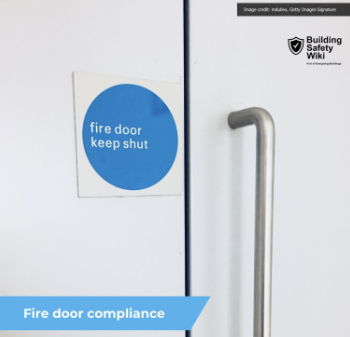
38% of Gen Zs feel safe when a fire door is wedged open.
Stunning images from around the world
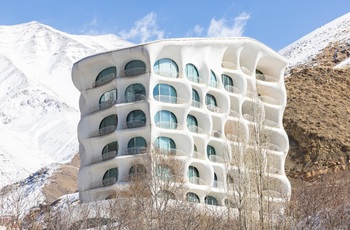
Shortlist for CIOB’s Art of Building photography competition.
Guidance for conversion of traditional pre-1919 stone buildings.
Industrial heritage in the Ruhr

A marked difference to the fate of industrial landscapes in the UK.
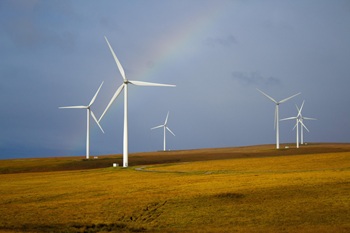
Communities will be able to build their own clean energy.
Why diversity and inclusion matters for SMEs

CIOB’s D&I Charter shows how practical changes can support long-term growth.
Cut electricity bills to power growth

Coalition sends joint letter to the Chancellor.

Gasholders: a history in pictures. Book review.
Recognition, influence and growth

SocEnv identifies three strategic pillars in new strategy to 2045.
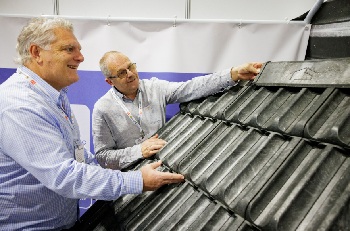
Discover the future of roofing, cladding and insulation.

New guidance for professional practice, cultural change and regulation in social housing.
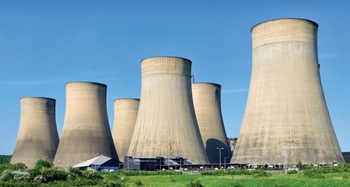
The heritage of nuclear and conventional power stations.